If you're stuck in a copier lease you don't like, whether it's slow service, surprise charges, or a machine that can't keep up, you probably have more options than you think. Timing matters, though. Most copier leases are written so that if you do nothing, you keep paying. This guide covers how copier leases end, the difference between FMV and $1 buyout leases, how auto-renewal works, and how to give notice correctly so you can move on.
First, Find Out Who You Actually Lease From
Your copier dealer usually isn't the company holding your lease. Most office equipment leases are funded by a third-party leasing company, and the dealer only handles sales and service. The leasing company's name is on your monthly invoice and at the top of the lease agreement.
This matters because your notice has to go to the leasing company, not just your dealer or sales rep. Telling your rep you're done does not end the lease.
Pull out your lease agreement and find these details:
- Leasing company name and lease/contract number
- Lease start date and term (36, 48, 60 months, etc.)
- Equipment serial number(s)
- End-of-lease purchase option (FMV, $1, or 10%)
- The notice requirement, usually in a section called "End of Term," "Renewal," or "Return of Equipment"
If you can't find your copy, call the leasing company and ask for a copy of the agreement and a payoff quote. They're required to tell you what you owe.
FMV Lease vs. $1 Buyout Lease
Your buyout option decides what "the end of the lease" means for you.
Fair Market Value (FMV) Lease
This is the most common copier lease. At the end of the term, you usually have three choices:
- Return the equipment and walk away
- Buy it at its fair market value
- Renew the lease, often month to month
FMV leases have lower monthly payments, but you don't own anything at the end, and they almost always include an auto-renewal clause (more on that below).
$1 Buyout Lease
A $1 buyout lease works more like financing. Payments are a little higher, but you own the equipment for $1 when the term ends. There's nothing to return, though you'll need to confirm the title transfer and arrange your own service going forward.
Which One Do You Have?
Look for "Purchase Option" in your lease. If it says "Fair Market Value" or "FMV," read the renewal section carefully, because that's where most businesses get caught.
How Copier Lease Auto-Renewal Works
Most FMV copier leases include an automatic renewal clause, sometimes called an "evergreen" clause. It usually says something like this:
"Unless Lessee provides written notice of its intent to return the equipment at least 90 days but no more than 150 days prior to the end of the term, this lease will automatically renew..."
Two things stand out:
- There's a notice window, not just a deadline. Many leases require notice within a specific range, such as 60–120 or 90–150 days before the end date. Notice sent too early may not count, and notice sent too late almost certainly won't.
- Missing it can lock you in. Depending on your lease, it may renew month to month (manageable) or for a full extra year at the same payment (expensive).
Auto-renewal isn't necessarily a scam. It's standard leasing language. It's just easy to miss when the lease was signed three to five years ago by someone who may not work there anymore.
How to Give Notice the Right Way
- Calculate your notice window. Count back from your lease end date using the days listed in your agreement. Put both dates on your calendar.
- Put it in writing. Include your company name, lease number, equipment serial numbers, and a clear statement such as: "We do not intend to renew this lease and will return the equipment at the end of the term."
- Send it the way the lease requires. Many leases specify certified mail. Send it certified mail with a return receipt and email a copy, even if email isn't required.
- Ask for written confirmation and return instructions from the leasing company.
- Keep everything: the letter, the mail receipt, and any replies.
Can You Get Out of a Copier Lease Early?
Most copier leases are non-cancelable. You can't just stop paying because you're unhappy with the service. But you can still get out early - but this is not guaranteed depending on how long is left on your lease, the remaining dollar amount, etc. The most common way is a lease buyout through a new dealer:
- The new dealer requests a payoff quote from your current leasing company.
- The remaining balance is paid off or rolled into your new lease, often at a monthly payment similar to (or lower than) what you're paying now.
- You get newer equipment and a new service provider at the same time.
Also check whether your service agreement is separate from your lease. Many are, with their own terms and cancellation rules. Switching service providers may be simpler than you'd expect.
Returning the Equipment: Don't Skip These Steps
- Wipe the hard drive. Copiers store images of scanned, copied, and faxed documents. Before any machine leaves your office, make sure the data is securely erased and ask for a certificate of data destruction.
- Ask about return or pickup fees. Some leases require you to pay for packing and freight back to the leasing company.
- Keep paying until the return is confirmed. Payments usually continue until the equipment is received. Get proof of pickup.
- Return all supplies and accessories listed on the lease, such as finishers and paper trays, to avoid missing-equipment charges.
Let Us Review Your Lease
If your copier lease is coming up for renewal, or you're ready to leave your current provider, we can help. We'll review your agreement, find your notice window, request your payoff, and show you what an upgrade would cost. If switching doesn't make sense for you, we'll tell you.
Learn about our copier leasing options or request a quote today.
Nationwide Sales and Service
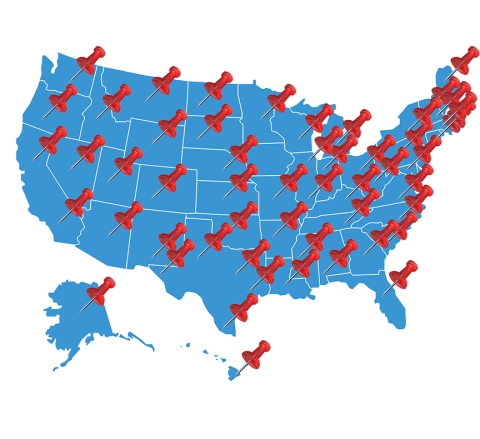
While Skelton Business Equipment, a Division of Platinum Copier Solutions, is based in Houston, we offer sales nationwide and have a partner for service in all major US markets. Your company interfaces with one vendor to handle it all!
Advantages of vendor consolidation:
- Automated meter collection for maintenance billing
- Consolidated billing for lease and maintenance
- Common model print fleet with matching touch-screen interfaces
- Standardized setup configuration so all of your equipment has identical settings at installation
- Support tools for IT staff to manage entire fleet
- One contact for sales and service!
- Pro-active toner shipment with PrintAnista (*opt-in)